Find Help
Sign Up

Support for parents

Support for parents

Worried about your child

We’re here to help you find the best way to support them and yourself

Every parent wants their child to feel safe, happy, and understood. If you are noticing changes in mood, behaviour, or online activity, trust that your instincts matter. You do not need to have all the answers to start helping. Your willingness to listen, ask gentle questions, and keep showing up can open the door to support and safety.

This page offers practical steps you can use today. You will find guidance on recognising signs that your child might be struggling, understanding the impact of online content and algorithms on their wellbeing, and knowing what to do if you are worried about suicide or self-harm.

We are here to give you the guidance and resources you need so you can support your child with confidence and care.

Advice

What can I do?
There are things you can do to help your child, and helplines are available if you need someone to talk to. You do not have to face this by yourself.

Understanding what to look out for

  • Changes in behaviour. Someone struggling with their mental health might seem withdrawn or less interested in things they usually enjoy.
  • Sharing heavy feelings. They might talk about feeling unworthy, like a burden, or share thoughts such as “nobody likes me” or “I’m not good enough.” This might be in conversation or through what they share online.
  • Sharing signs of feeling hopeless. They may share things like wishing they weren’t alive or not wanting to be here anymore. This could also be a theme within the content they share, like or comment on.
  • It’s may not always be obvious. It might be hard to spot these things if someone doesn’t want others to know how they are feeling. In this case they might appear to be their normal self.

Talking about suicide

  • Ask direct questions. Mental health experts say a clear question can help someone open up, even if it feels difficult. You could ask ‘are you thinking about harming yourself?’.
  • Share what has concerned you. If you have noticed a change in them or become worried about something then sharing this can invite a conversation which can lead to the right support.
  • Don’t answer for them. It’s important to give them space to answer in their own time and own words. Answering for them can feel like a normal response but it could prevent them from opening up honestly.
  • Be aware they may not be ready to talk. Approach the conversation from a place of support rather than pressure. Respect their pace and let them know you’re there when they’re ready.
  • Remember your role is to support, not to solve. You can support your child best by being there for them, listening and not judging. It’s best not to try and solve problems or say you know how they are feeling. Being present matters most.
  • Talk about support services. Remind them they deserve help and that support is available to get through these feelings. Share different services with them and help them find what will work best for them.
  • Use the right language. You can read more about how to talk about suicide and the right language to use in the R;pple and Zero Suicide Alliance guide.

Supporting my child with their mental health

  • Find time to talk. Make space for regular, calm conversations. These could be whilst in the car or doing something together. You could also send a message to start the conversation.
  • Listen openly. Give them your full attention without judgement. They need to feel that they have your support and understanding.
  • Validate their feelings. Let them know it’s okay to feel how they feel. Gently explain that when feelings of sadness or worry continue or feel overwhelming then it can be important to get support.
  • Role model healthy coping strategies. Show how you manage stress and heavy emotions. This could be through making time for the things you love or talking to someone.
  • Gently discuss triggers. Talk about what situations or content might make them feel upset or anxious and discuss ways to manage those moments together.
  • Build positive routines together. Encourage healthy habits for the whole family that support wellbeing, like regular sleep routines, making time for exercise, and having downtime.
  • Seek support. If things feel overwhelming, reach out to trusted professionals or services. There is support available for you and your child.

Talking to your child about their online experiences

  • Start with curiosity. Ask open questions and show genuine interest in what they enjoy online, rather than starting from a place of worry.
  • Listen without judgement. Recognise that the digital world is a big part of your child’s life. You don’t need all the answers or to understand every platform to support them. What matters most is listening openly and seeing things from their perspective.
  • Explore platform design together. Learn how the way platforms are built can shape online experiences and affect wellbeing. Talk about features like algorithms and likes, and how they might influence what your child sees and how they feel.
  • Teach values, not just rules. Encourage kindness, respect, and critical thinking in online spaces. These are important skills which can be used across platforms and can support young people to navigate online spaces safely.
  • Keep the conversation going. Regular, relaxed conversations will put you in the best position to show your child you are interested in their lives online and there to support them.
  • Leave the conversation open with reassurance. Remind them they matter and that their safety and wellbeing are more important than any rule.

Spotting harmful content

  • Content which encourages others to harm themselves or end their lives is harmful. This content can present itself as a solution to feeling low or depressed but there is safe help which can support anyone affected.
  • Content which promotes eating disorders is harmful. Sometimes this content is easy to spot as it may encourage someone to not eat but sometimes it can be subtle. Anything which is not recommended by the NHS or a licensed dietitian may not be safe to follow.
  • Content which triggers heavy negative feelings can be harmful. It’s normal to see something sad and feel affected by that but if those feelings are overwhelming or it feels like there is no escape from them then it’s important for someone to get help.
  • Content which discourages someone from getting help is harmful. This would include content which encourages someone to keep their feelings private or makes them feel that no one will understand or want to help. It could also be content which gives someone pre-written answers to deflect questions from loved ones.
  • Constant exposure to harmful content can negatively impact wellbeing. This could include contentthat talks about being unworthy or a burden and make you feel like this will never change. This isn’t true and with the right help anyone affected can feel differently.
  • Not all harmful content will be obvious. Sometimes it could appear as art or content which is simply sharing someone’s feelings. It could also be content which feels relatable to us if we are already feeling low or anxious.
  • There are other types of harmful content. These include violent or distressing content and hate speech or bullying or content. There are also illegal forms of content which include child sexual abuse material, terrorist activity and content which incites violence against others due to their race, religion or ethnicity.

Reporting harmful content online

  • Report harmful content directly to the platform. There will usually be a report button on the content itself so look out for a flag or 3 dots. You can also report profiles of accounts which are continuing to share harmful content. Look out for the 3 dots at the top of a profile to make a report.
  • There’s more support available with reporting to platforms. If you or your child have reported harmful content to the platform but haven’t got a response or need help with the response then you can seek further support via ReportHarmfulContent.com (over 13s only).
  • Report to CEOP if you’re concerned about an adult’s behaviour. If you’re concerned about how someone is talking to your child or a young person online and that they may be harmful then contact CEOP.

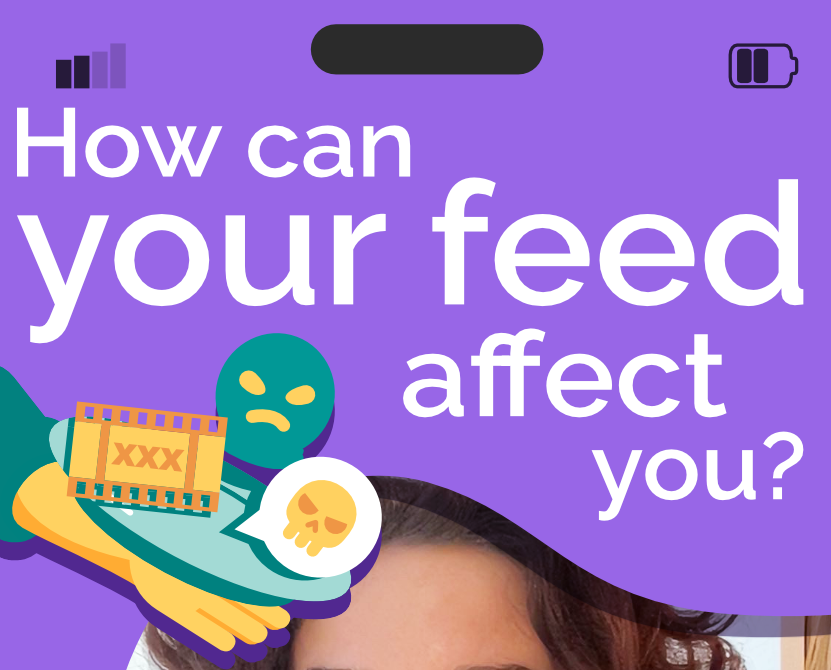
Understanding how online algorithms affect us

  • Algorithms shape our feeds. Platforms recommend content to us based on our data (age, gender, location etc), how we use the platform (likes, views, comments etc) and what other people like and engage with.
  • Suggested content isn’t filtered for wellbeing. The algorithm won’t decide if content is healthy or harmful before recommending it. If someone has commented on something sad or viewed it then it may start to share more similar content with them. This happens because of the way the platform is designed and isn’t a young person’s fault.
  • Patterns build quickly. The more we view certain content, even if it has been suggested to us, the more it appears. This can be subtle at first but quickly build and feed us content which can negatively impact our wellbeing.
  • What we see online matters. Constant exposure to content that makes us feel low or unworthy can impact our wellbeing over time. This can happen to anyone and does not mean you are less worthy.
  • Put mental health first online. Unfortunately, it can be difficult to break the pattern of algorithms but taking steps like unfollowing harmful accounts and muting harmful content can be helpful.
Advice

Seek professional advice

Where to find help

If you or someone you care about needs help please contact one of the services shown below or use the Find a Helpline service to locate more specific services based on your needs and the type of interaction you would prefer.

In an emergency don’t be afraid to dial 999.
Seek professional advice

Struggling?

Get free, confidential support from a real person.

Find the most appropriate helpline based on your location, the type of help you are looking for and how you’d like to make contact.

Search
Shout
contact details

Shout is a 24/7 text service, free on all major mobile networks, for anyone, anytime. It’s a place to go if you’re struggling to cope and you need immediate help

Papyrus
contact details

Confidential helpline for people under 35 or anyone concerned about a young person. Free 24/7

Childline
contact details

ChildLine is a private and confidential service for children and young people up to the age of 19

Call: 0800 1111
UK Safer Internet Centre
contact details

For advice and support to children and young people, parents and carers to promote the safe and responsible use of technology

Grief Encounter
contact details

A service for young people, their friends or family members needing help or advice following the death of someone close

Samaritans
contact details

Samaritans are available round the clock, every single day of the year

Call: 116 123

Resource Hub

Further resources and guidance

If you need more guidance and support, these resources may be useful.

Sharing Molly’s Story – For Parents

Sharing Molly’s Story – For Parents

This guide supports parents to talk safely and confidently with their children about stories like Molly’s and the issues it raises about harmful online content.

Safe Scrolling

Safe Scrolling

This guide helps parents and teachers support young people to recognise harmful or unsettling content online and understand how it can affect their feelings and wellbeing.

Tackling Difficult Conversations

Tackling Difficult Conversations

This guide supports parents and carers to approach difficult conversations with calm, care and confidence.

Stay Connected

Keep up to date with our work and connected to support

Sign up to receive regular updates

Check here for latest news stories

Support others and order free help cards